
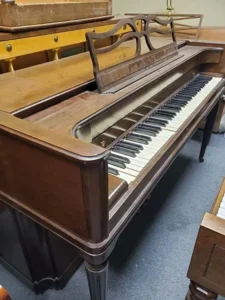
An older piano can be more than just a musical instrument. It may have been passed down through generations, used for years of lessons and performances, or simply become an important part of your home.
As pianos age, however, they can develop problems with tuning stability, tone, key response, finish, and other components. At that point, many owners begin wondering whether the instrument is worth repairing or restoring.
There is no single answer for every piano. Before deciding on piano restoration, it helps to consider the piano’s condition, quality, history, and what you hope to get from it.
1) Consider the Piano’s Overall Condition
The first step is understanding what kind of work the piano actually needs.
Some older pianos may only require a few repairs or adjustments, while others need more extensive work. Problems can involve the strings, pinblock, soundboard, dampers, keys, action, or exterior finish.
A professional evaluation can help determine whether the piano needs targeted repairs or a more complete restoration. Not every older piano needs to be completely rebuilt.
2) Think About Its Sentimental Value
Financial value is not the only reason to restore a piano.
A piano that belonged to a parent, grandparent, or another family member may carry years of memories that cannot easily be replaced. In those situations, restoring the instrument can help preserve something meaningful for future generations.
Even when an older piano may not have exceptionally high resale value, its personal value to your family can still make restoration worthwhile.
3) Look at the Quality and Make of the Piano
The manufacturer, age, construction, and original quality of the instrument can all influence whether restoration makes sense.
Some well-built older pianos were designed to last for decades and may respond very well to professional restoration. In other cases, replacing the instrument may be more practical than investing in extensive work.
The piano’s current condition matters just as much as its name or age, so it is best to have the entire instrument evaluated rather than making a decision based on the brand alone.
4) Consider How the Piano Plays and Sounds
A piano may look beautiful on the outside while still needing significant mechanical work.
Sticky or uneven keys, poor responsiveness, inconsistent touch, unusual noises, or difficulty staying in tune can point to worn internal components. Depending on the problem, piano action and key work may improve the way the instrument responds and performs.
More extensive issues involving the pinblock, soundboard, tuning pins, or strings may require piano belly work as part of the restoration process.
The goal is not simply to make an old piano look newer. A successful restoration should also improve how the instrument sounds, feels, and functions.
5) Decide What You Want From the Finished Piano
Before starting a restoration project, think about how you plan to use the piano afterward.
Are you hoping to preserve a family heirloom? Do you want an instrument that can be played regularly? Are you trying to improve its appearance, performance, or both?
Your goals can help determine how much work makes sense. Some owners may want mechanical repairs while preserving the piano’s existing appearance. Others may choose a more complete project that includes both internal restoration and piano refinishing.
Find Out What Your Piano Needs
Every older piano has a different history, condition, and level of wear. Taylor Piano Restorations has been servicing and restoring pianos throughout Richmond and Central Virginia for more than 50 years. Our team can evaluate your instrument, explain what work may be needed, and help you determine the right approach for your piano.
If you are considering restoring an older or inherited piano, contact us at (804) 647-9805 to discuss your instrument and its condition.
Leave a Reply
You must be logged in to post a comment.