
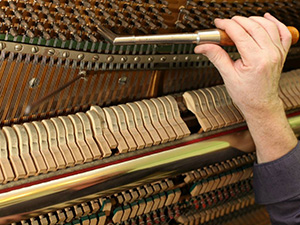
A piano can be a long-term investment, a family heirloom, or simply an instrument you enjoy playing every day. No matter how often you sit down at the keys, regular tuning is an important part of keeping your piano sounding its best.
For many household pianos, scheduling professional piano tuning about every six months is a good guideline. However, the ideal schedule can vary depending on how often the piano is played, where it is located, and the conditions inside your home.
Why Does a Piano Need Regular Tuning?
A piano produces sound through strings held under significant tension. During tuning, a technician carefully adjusts the tension of those strings to bring the instrument to the correct pitch.
Over time, your piano will gradually move out of tune. You might notice that individual notes sound slightly off or that chords no longer sound as clean and balanced as they once did.
Regular tuning helps maintain the proper pitch and keeps your piano ready for practice, lessons, performances, or simply playing at home. This is especially important when the piano is used alongside other instruments or for singing, since pitch differences become much more noticeable.
Consistent tuning can also help your technician spot potential problems before they become more significant. If a piano goes too long without service and falls considerably above or below the proper pitch, it may require a pitch adjustment in addition to a standard tuning.
How Richmond’s Temperature and Humidity Can Affect Your Piano
Changes in temperature and humidity can affect how well a piano stays in tune. This is especially important for piano owners in Richmond and throughout Central Virginia, where indoor conditions can change as heating and cooling systems run throughout the year.
A piano contains many wooden components that can react to changes in moisture. As conditions fluctuate, the instrument can experience changes that affect string tension and tuning stability.
Large changes in humidity and temperature can even cause a piano to fall flat or become too sharp, potentially requiring pitch raising or other adjustments.
Keeping your piano in a relatively stable environment and following a regular maintenance schedule can help reduce the effects of these seasonal changes.
When Should You Schedule Your Next Piano Tuning?
If it has been around six months since your last tuning, it may be time to schedule another appointment. You may want to have the piano checked sooner if it is played frequently, has recently experienced significant environmental changes, or noticeably sounds out of tune.
Pianos used for teaching, performances, or playing alongside other instruments may also benefit from more frequent attention.
If your piano does not sound quite right, don’t assume tuning is always the only answer. Changes in tonal quality may call for piano voicing, while issues with key response could point to the need for piano action and key work.
Keep Your Piano Sounding Its Best
Routine maintenance can make a noticeable difference in how your piano sounds and performs. Taylor Piano Restorations provides professional piano tuning in Richmond, VA, and throughout Central Virginia. With more than 50 years of piano service experience, our team can tune your instrument, assess its condition, and recommend additional care when needed.
If your piano is due for its next tuning, contact us at (804)647-9805 to schedule an appointment.
Leave a Reply
You must be logged in to post a comment.